
Security decisions tend to get pushed down the priority list until something forces action. By then, you’re choosing quickly instead of choosing well. The difference between a system that does its job and one that creates constant friction comes down to how well it fits your environment, not how advanced it looks. Getting this right early saves time, money, and a lot of second-guessing later. Here’s our guide on how to do just that.
Overview of CCTV and IP Camera Systems
Choosing between an IP camera and a CCTV installation affects how reliably you can monitor your space, respond to incidents, and scale your security as your business grows. While both systems serve the same core purpose, how they capture, process, and deliver video is fundamentally different. Understanding those differences is where smarter decisions start.
Feature and Performance Comparison
Traditional CCTV systems rely on analog cameras connected to a digital video recorder (DVR) via coaxial cabling. Video signals are transmitted in a continuous stream, then digitized and stored locally. This setup is predictable and stable, but inherently limited in resolution and flexibility. Even with HD-over-coax upgrades, CCTV systems typically cap out below the clarity and detail offered by modern IP setups.
IP camera systems operate on your network, transmitting digital video data over Ethernet to a network video recorder (NVR) or cloud-based platform. Because the footage is already digital at the source, you get higher resolutions, often in 4K, along with better frame rates and more advanced compression. That translates into sharper images, smoother playback, and more usable evidence when you actually need it.
Performance-wise, IP systems also unlock features that analog simply can’t match. Think remote access from any device, intelligent video analytics like motion zoning or facial recognition, and easier integration with access control or alarm systems. CCTV systems can support remote viewing, but typically through more rigid, hardware-dependent setups that don’t scale as cleanly.
Benefits & Limitations of CCTV and IP Camera Systems
CCTV’s biggest advantage is simplicity. It’s cost-effective upfront, straightforward to install in smaller environments, and doesn’t rely heavily on your network infrastructure. For businesses with basic monitoring needs, like a small retail shop or warehouse with fixed coverage, it gets the job done without overengineering the solution. The tradeoff is longevity. As expectations around video quality and smart features increase, CCTV systems can feel dated faster than you’d like.
IP camera systems are built for flexibility and future growth. You can add cameras without major rewiring, adjust coverage remotely, and tap into analytics that turn passive footage into actionable insights. They’re especially valuable as part of a security system integration in environments where security overlaps with operations, such as tracking customer flow or monitoring restricted areas in real time. The downside is complexity. They require proper network design, bandwidth planning, and cybersecurity considerations to perform at their best.
Business Considerations for Security System Selection
Selecting the right system is less about the cameras themselves and more about how security fits into your day-to-day operations. The right choice aligns with your physical layout, risk profile, IT infrastructure, and how your business expects to grow over time. A system that looks good on paper can underperform quickly if it doesn’t match how your space is actually used.
Real-World Scenarios and Use Cases
Different environments place very different demands on surveillance systems. What works in a small retail setting won’t hold up in a multi-site operation or a facility with strict compliance requirements.
Retail storefronts and small businesses
CCTV systems often make sense here. Fixed camera positions, predictable traffic patterns, and limited need for remote access keep things simple. You get reliable coverage without overloading your budget or network.
Multi-location businesses or franchises
IP systems stand out. Centralized monitoring across multiple sites, real-time alerts, and remote access allow managers to maintain visibility without being physically present. This becomes critical when consistency across locations matters.
Warehouses and logistics facilities
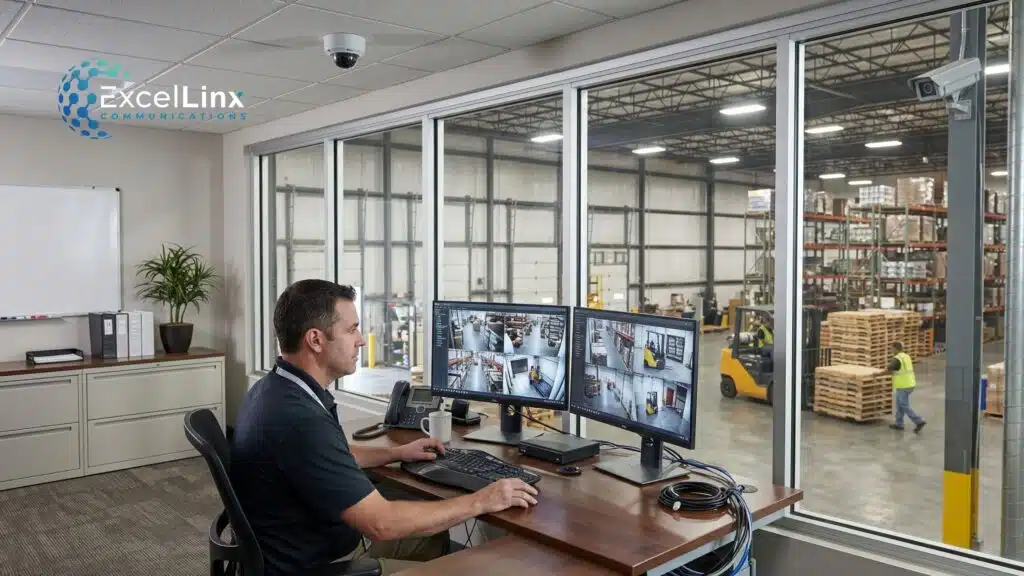
IP cameras offer higher resolution and wider coverage, which helps with monitoring large floor areas, tracking movement, and reviewing incidents in detail. Integration with access control systems can also tighten perimeter security.
Office environments and corporate spaces
IP systems support more than just security. Features like occupancy tracking, after-hours monitoring, and integration with building management systems make them part of a broader operational toolkit.
Regulated industries like healthcare or finance
IP-based setups with access control system installations provide better audit trails, encryption options, and compliance-ready storage solutions. When documentation and data integrity matter, analog systems typically fall short.
Operational and Technical Considerations
Beyond use case, there are practical factors that influence how well a system performs once it’s deployed. This is where many businesses underestimate the long-term impact of their choice.
Scalability and expansion
IP systems allow you to add cameras or upgrade capabilities without reworking your entire infrastructure. CCTV systems tend to require more rigid planning upfront, which can limit flexibility later.
Network capacity and performance
IP cameras depend on your network. Bandwidth, switch capacity, and segmentation all need to be accounted for. Without proper planning, you risk latency, dropped frames, or system bottlenecks.
Installation complexity and disruption
CCTV installations are often more straightforward in existing buildings with established cabling paths. IP systems may require structured cabling upgrades or network reconfiguration, especially in older facilities.
Cybersecurity and data protection
IP systems introduce new considerations around network security, access control, and firmware management. Proper configuration is essential to prevent vulnerabilities. CCTV systems, being closed-loop, have a smaller attack surface but less flexibility.
Total cost of ownership
CCTV may cost less upfront, but IP systems often deliver better long-term value through scalability, reduced maintenance, and added functionality. The real question is whether you’re optimizing for immediate savings or long-term capability.
A well-matched system doesn’t just record footage. It supports how your business operates today while leaving room for how it evolves tomorrow. Learn more about how often you should upgrade your business security system.

Guidance and Decision-Making Steps
At this stage, the goal isn’t to pick a “better” technology. It’s to choose the system that aligns with how your business actually operates. That means balancing current needs with future demands, while avoiding unnecessary complexity. A structured approach keeps you from overbuilding or locking into a system that can’t evolve with you.
Define Your Security Objectives
Start with clarity around what success looks like. Not all surveillance systems are built for the same outcomes, and vague goals tend to lead to mismatched solutions.
- Identify whether your priority is deterrence, incident review, or real-time monitoring
- Determine the level of detail required, such as general oversight versus facial or license plate recognition
- Map out critical areas like entrances, high-value zones, and blind spots
- Consider whether footage needs to support compliance, liability protection, or internal investigations
When these priorities are clearly defined, the differences between CCTV and IP systems become more practical, not theoretical.
Assess Infrastructure and Constraints
Your existing environment plays a major role in what’s feasible without unnecessary cost or disruption. This is where many decisions are either validated or ruled out.
- Evaluate current cabling, server capacity, and network performance
- Identify physical limitations like building layout, distance between zones, and interference risks
- Review IT resources available for ongoing system management and support
- Factor in downtime tolerance during installation or upgrades
If your infrastructure can’t support an IP system without major upgrades, that needs to be addressed early rather than discovered mid-project.
Compare System Capabilities Against Use Cases
Once your goals and constraints are clear, you can match system capabilities directly to real-world needs. This step prevents overpaying for features that won’t be used or missing ones that matter.
- Align camera resolution and coverage with the level of detail required
- Evaluate remote access, mobile monitoring, and multi-site visibility needs
- Consider whether analytics like motion detection or behaviour tracking add operational value
- Look at integration opportunities with alarms, access control, or other systems
This is where IP systems often separate themselves, but only if those added capabilities actually support your workflows.
Plan for Growth and Long-Term Value
Security systems are long-term investments. What works today should still make sense three to five years from now without requiring a full replacement.
- Project future expansion, whether that’s new locations, additional coverage, or higher resolution needs
- Consider how easily the system can scale without major reconfiguration
- Weigh upfront costs against ongoing maintenance, upgrades, and support
- Account for evolving security risks and how adaptable the system needs to be
A thoughtful decision here avoids the common cycle of replacing underpowered systems sooner than expected. The right choice isn’t just functional on day one, but continues to deliver value as your business changes. If the path forward still isn’t clear, the ExcelLinx Communications team is always a good sounding board.
Make Security a Strategic Advantage
The strongest security systems don’t just capture footage, they shape behaviour. When employees know coverage is reliable and leadership can actually act on what’s recorded, accountability improves without constant oversight. When customers feel a space is well-managed, trust follows naturally. That shift from passive monitoring to active influence is where real value shows.
If your current setup isn’t delivering that level of confidence, it’s time to rethink it. Start with a security system assessment and build a system that works as hard as your business does.